Lesson 1
Entering the Space
What it means to step into Hoodoo study with reverence, curiosity, and an open heart.
✦ Free for every visitor ✦
HU 100 — Entering the Space
A warm, no-cost welcome to Hoodoo University. Learn how to approach the practice and the space with spiritual etiquette, respectful study, and care.

Lesson 1 · Video welcome
Press play and let Auntie Tasha welcome you to the space herself. She'll set the tone for your studies — how to enter, how to listen, and how to carry yourself while you learn.
The welcome mat
Four short lessons designed to help you enter the tradition with clarity and respect.
Lesson 1
What it means to step into Hoodoo study with reverence, curiosity, and an open heart.
Lesson 2
How to honor the tradition, the elders, the ancestors, and yourself while you learn.
Lesson 3
Who the ancestors are, why we call on them first, and how to begin building a living relationship with them through prayer, offering, and remembrance.
Lesson 4
Membership, courses, the Demonstration Lab, and how to choose your path forward.
Lesson 1 · Full lesson
The drums open the door
Before the first word, the drums speak. They start slow and steady — like a heartbeat. The pace picks up, drum layered upon drum, rising to a crescendo. Then a fast stop. Sit with what the silence leaves behind. That silence is part of the teaching.
From Auntie Tasha
"Look around you. Look at where you're standing. This space is sacred. This space is you. This space is Hoodoo University."
Whenever you enter the space, I recommend it being intentional and with open heart. Those are the best ways to learn and receive information. This is a space created for us to freely explore and consider traditions that are indigenous to our ancestors, in hopes to preserve tradition and continue legacy. When you enter this space, do so with the desire to learn about ways to begin — and deepen — your relationship with your benevolent ancestors.
Look around you first. Before any herb, any candle, any working — locate yourself. You are not browsing content. You are standing inside a living tradition, and the tradition is watching how you arrive. In Hoodoo, the state of the worker shapes the work. A hurried, distracted entrance produces hurried, distracted learning. A deliberate one — feet planted, mind settled, heart open — produces something that can actually take root in you.
Intention is the key that opens the door. You chose to come here. Say why — out loud, or in a journal, or simply in your spirit: "I am here to learn. I am here to remember." Intention is not a formality in this tradition; it is the first ingredient in every working you will ever do. Practicing it now, on something as simple as entering a classroom, trains the muscle you will rely on when the work matters more.
Sacred is not decoration. When Auntie Tasha says this space is sacred, she means it the way our people have always meant it: sacred ground is where the ancestors can reach you. It can be a church, a kitchen table, a corner shelf, or a school like this one. What makes ground sacred is not ornament — it is conduct. Reverence, honesty, consistency, and respect for what you are being trusted with.
Why we preserve. This knowledge was carried here in chains — West and Central African spiritual technology that survived the Middle Passage and took root in the American South, practiced in secret, hidden in Bible verses and root bags, kept alive by grandmothers and rootworkers who could be punished for it. To study Hoodoo is to receive what people suffered to keep. That is why we preserve it, and why we continue the legacy forward — so the tradition outlives us too.
Benevolent ancestors. Notice the word "benevolent." In this space, you will learn to discern carefully who you invite close — not every spirit of the dead belongs at your table. Lesson 3 will show you how to begin, and how to go deeper. For now, hold the intention. That is enough to enter.
Practice · Do this before Lesson 2
Reflection · Journal prompts
Lesson 2 · Full lesson
Honoring Spirit. Honoring Each Other.
Welcome home · Why respect comes first
Welcome to Hoodoo U. Before you light a candle, dress a root, or open a single lesson, there's something we need to settle together: how we carry ourselves in this work and in this family.
In Hoodoo, respect is not a nice extra. It is the foundation. Our ancestors survived by knowing how to honor what was bigger than them and how to take care of one another. That same respect is what makes the work hold. Without it, nothing stands.
“You don't have to know everything to belong here. You only have to come with respect, an open heart, and a willingness to learn.”
— Auntie Tasha
Upward and outward
Respect toward Spirit, the Ancestors, and the tradition itself.
Across
Respect toward every member of this community, whether they have been practicing for thirty years or thirty minutes.
Part One · Respect for Spirit
We ask. We petition. We never demand.
The Ancestors are the heart of Hoodoo. When we speak of them, we mean three circles of kin:
Speak to your Ancestors the way you would speak to a respected elder sitting at your kitchen table. Greet them. Thank them. Ask, don't order. They are not servants to be summoned; they are family to be honored.
Give what is appropriate and give it with intention. Never offer what you would not set in front of an elder at your own table. If you do not know what an ancestor liked, start simple: fresh water, a white candle, and your sincere words.
A living inheritance, not a trend
Hoodoo is a living African American tradition. It was born from survival, resistance, and the Black Southern experience. It carries Central and West African roots, from the Kongo to Benin and beyond, carried through the Middle Passage, kept alive by enslaved ancestors, and passed down along the Mississippi and throughout the South. When you study here, you are handling something that people protected with their lives. Treat it that way.
Hoodoo U teaches from documented, credible sources, including Harry Middleton Hyatt's field records and established formularies, alongside living practitioner knowledge. Unsourced internet spells are not a lineage. When you learn something outside class, ask: Where did this come from? Who carried it?
Remember
Hoodoo is not a costume. It is somebody's grandmother's knowledge.
Nothing on the altar is a prop
Candles, roots, oils, bones, dirt, and altar pieces are sacred once they are dedicated to the work. Handle them with care and intention, both your own and other people's.
Part Two · Respect for Every Member
No judgment. No dogma. Just family.
Everyone arrives at Hoodoo U from a different road. Some grew up in church. Some are coming from other spiritual traditions. Some have no tradition at all, just a pull they cannot explain. All are welcome here.
Remember
A question asked honestly is never a stupid question here. Laughing at someone's learning is not how we do things in this house.
What is shared here stays here
Open to learn. Rooted in a people.
Hoodoo U welcomes students of every background who come in good faith to learn. At the same time, Hoodoo carries a specific history rooted in racism and survival; that ancestral memory must be honored.
Remember
Hoodoo history is Black history. The practice of Hoodoo rootwork and conjure is a closed practice left to the descendants of enslaved Africans.
Part Three · Living It
How respect shows up day to day
We are family, and families sometimes step on each other's toes. When it happens, we handle it with care and accountability. Most issues begin with an honest, respectful conversation. Continued behavior brings a formal warning with clear expectations. Repeated or serious harm may result in removal from the community. Accountability means making it right with the person harmed and with Spirit. We aim to repair, not just punish.
Zero tolerance
Harassment, hate speech, and spiritual threats of any kind are never tolerated. These result in immediate removal.
Part Four · The Covenant
Read it aloud. Mean it. Sign it.
“We are each other's kin in this work.”
Optional opening blessing
You may mark your entry into Hoodoo U at your own altar or sacred space. You will need a white candle, a glass of fresh water, a quiet moment, and your own words.
Reflection · Journal prompts
Lesson 3 · Reading & practice
In Hoodoo, nothing begins without the ancestors. They are the ones who carried this tradition through the fire — who hid conjure in Bibles, who worked roots under the watch of overseers, who prayed in code so the work could survive. When you sit down to study, you are not studying alone.
Connecting begins with acknowledgment. Speak their names if you know them. If you don't, speak to "the ancestors whose names I do not know, but whose blood I carry." A glass of cool water, a white candle, and a few honest words are enough to open the door. You do not need elaborate tools — you need consistency and sincerity.
Connection deepens through practice. Set aside a small, clean space — a shelf, a corner of a table — where you refresh the water weekly, light a candle on a regular day, and speak to them as you would family. Listen in the quiet. Pay attention to dreams, songs that rise in your mind, and the small signs that answer back.
And connection asks for respect. The ancestors are not vending machines. Come with gratitude before you come with requests. Thank them for what you already have. When you make a promise to them, keep it.
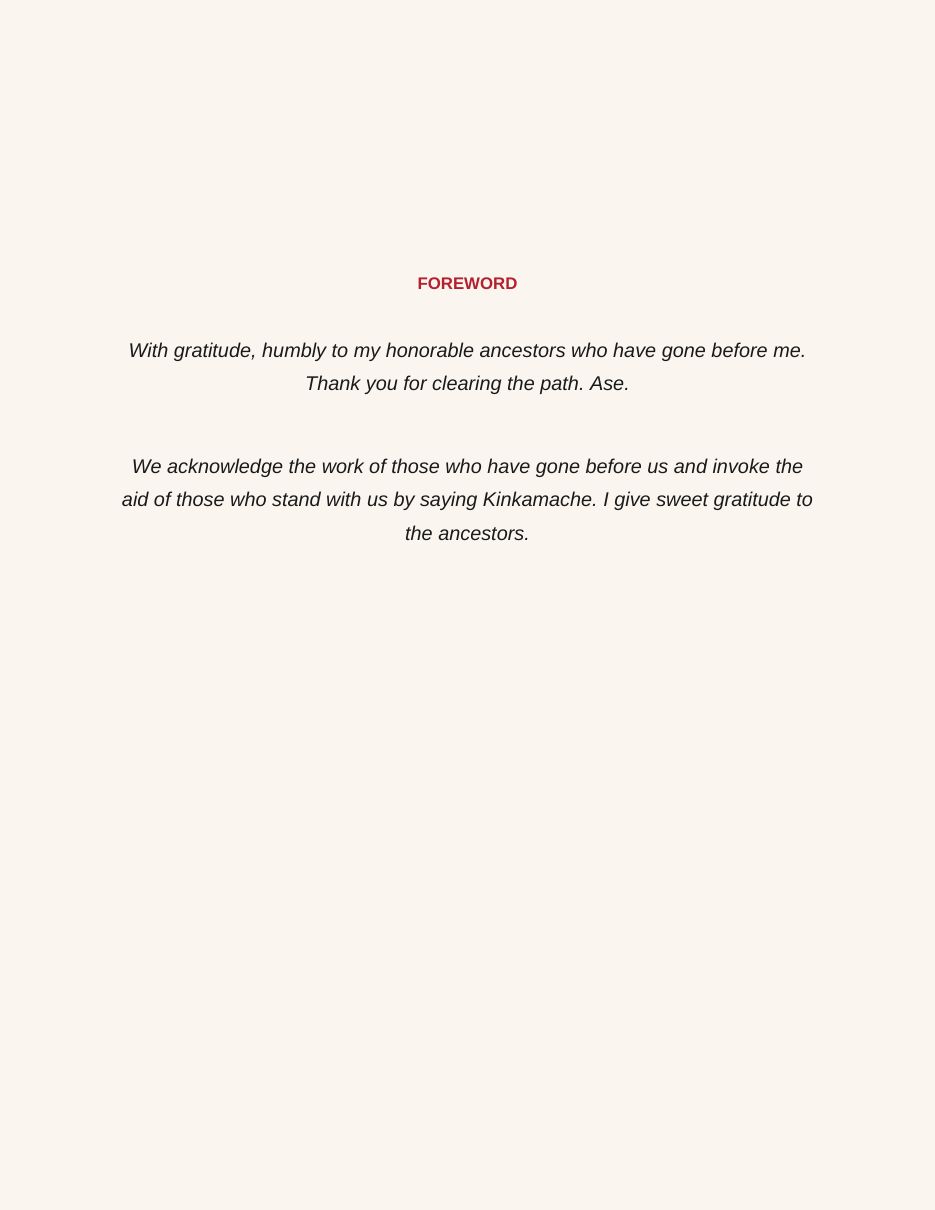
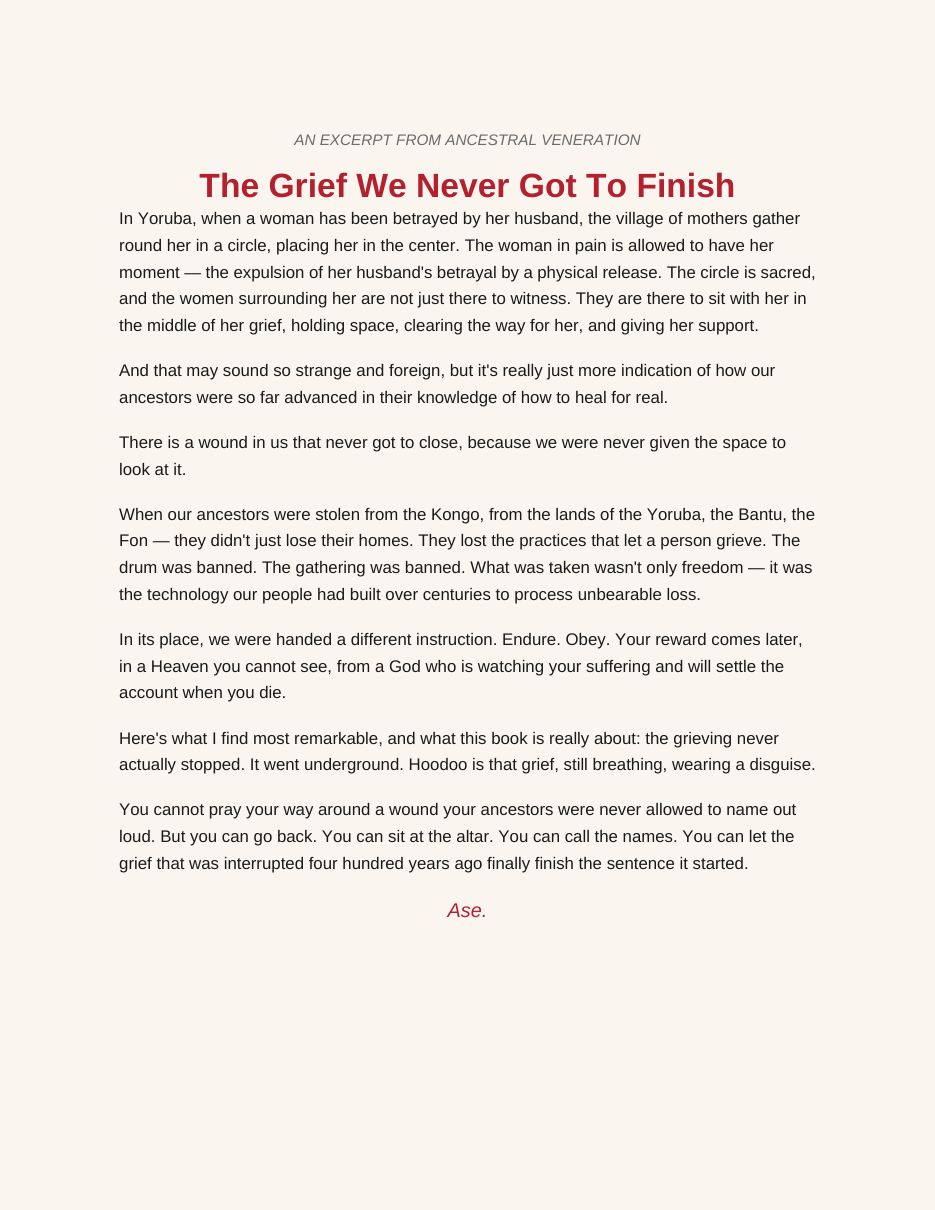
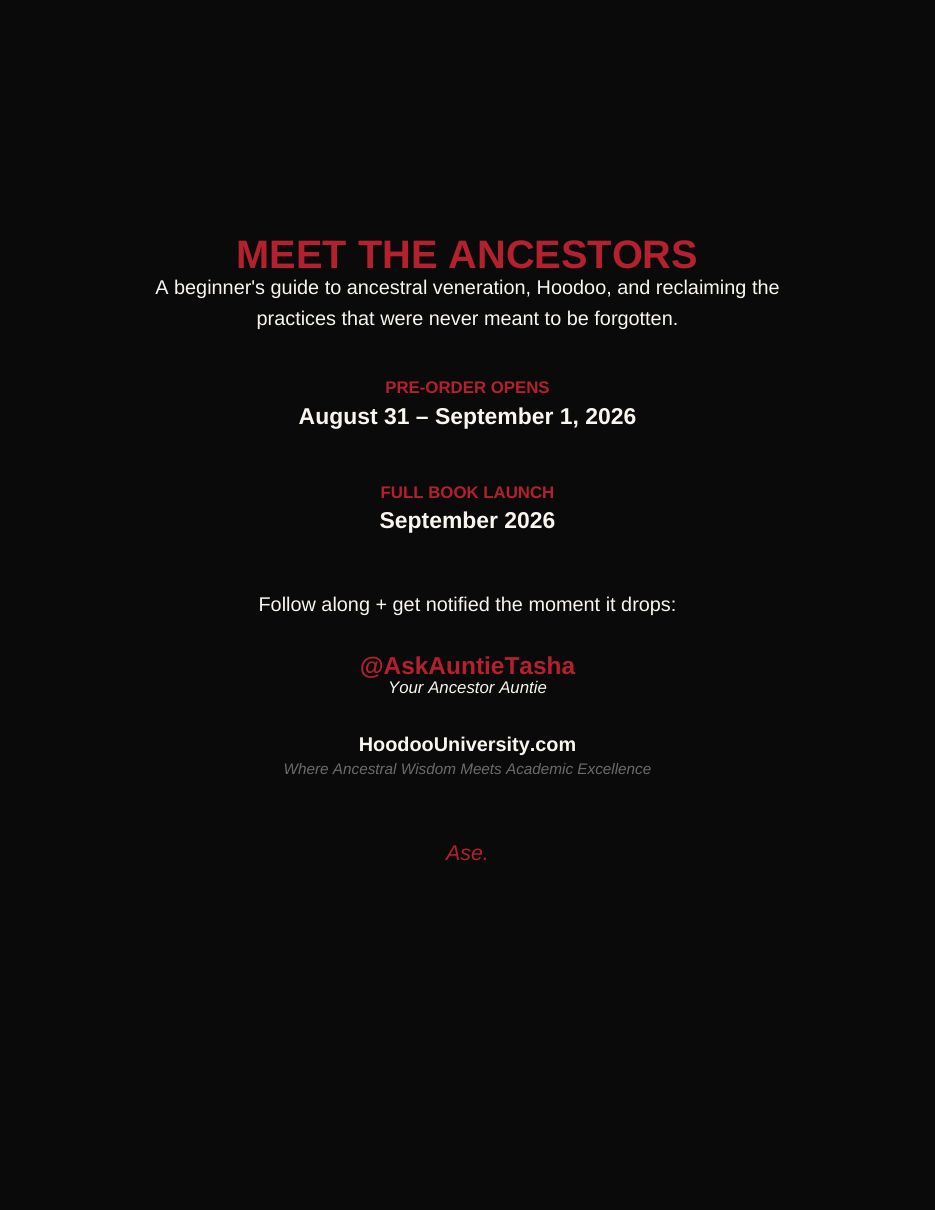
Free book excerpt
Read the teaser from Auntie Tasha's upcoming book directly in this lesson.




From the Head Auntie in Charge
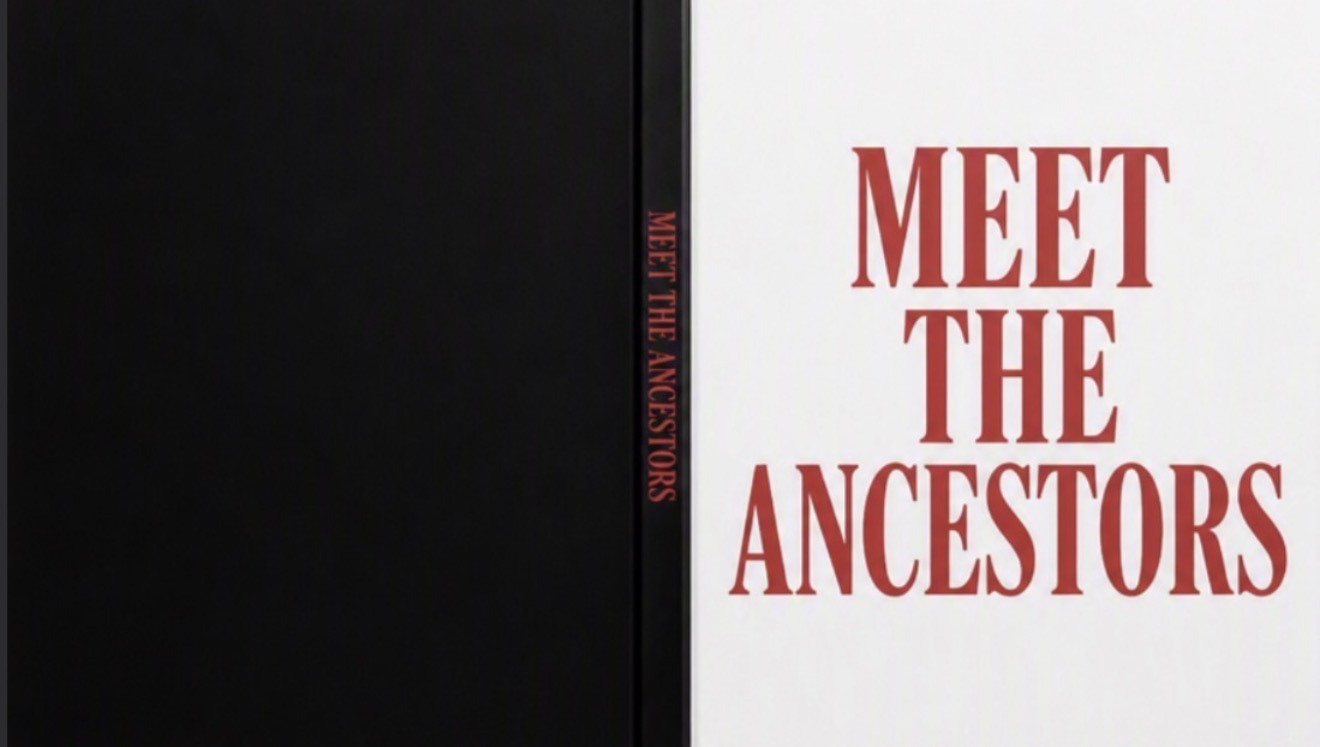
The complete 60-page e-book by Auntie Tasha, with teachings, stories, photographs, and practices for building your ancestor connection. Sold separately; not included with membership.
Meet the Ancestors is a digital ebook, delivered instantly to your email after purchase.
Ps “Don't see it? Check your spam or promotions folder or send us a holler info@hoodoouniversity.com
$30
Lesson 4 · Full lesson
II.
III.
IV.
V.
VI.
VII.
VIII.
IX.
X.
XI.
Your complimentary next step
Step into What They Call Weeds, We Call Medicine—a free, interactive rootwork field lesson with 16 plants, safety training, a field journal, and a knowledge check. No membership or sign-in required.