The witness archive

True Black HistoryNo Filter

This is a space for the breathtaking horrors and the triumphant resilience that carried enslaved people of African and Black American descent to freedom. We are not re-sharing, selecting, or diluting history. We are sharing the true Black history — what the record proves, what it cannot name, and the people remembered whole.

Open the record

The growing record · 8 accounts

Enter by name, place, or struggle.

Every account distinguishes evidence from uncertainty and ends with the institutions and records used to tell it.

Checking your seat…

The full record · every account

01August 1955

Racial terror · Childhood · Civil rights

Emmett Till

Money and Sumner, Mississippi

Emmett Louis Till was fourteen years old when white men abducted and murdered him in Mississippi. The crime, the acquittal, and Mamie Till-Mobley’s insistence that the world witness what had been done became part of the nation’s civil-rights reckoning.

Read the full record
02January 1923

Racial terror · Displacement · Reparations

Rosewood

Levy County, Florida

Rosewood was a majority-Black Florida community with homes, churches, businesses, and families. In January 1923, a white mob killed residents, burned the town, and drove survivors away after an accusation that was never proven.

Read the full record
03Early 1800s–Civil War

Slavery · Industrial labor · Family separation

Salt, Fire, and Enslaved Labor

Kanawha Salines, present-day West Virginia

Slavery was not confined to cotton fields. In the Kanawha Valley, enslaved people worked salt wells, furnaces, coal mines, boats, and barrel shops in one of the country’s largest salt-producing districts.

Read the full record
041865–1960s

Education · Law · Organized resistance

Jim Crow Education

The United States

Black communities built schools in freedom, then faced laws designed to keep those schools separate and unequal. Jim Crow education was not an accident of geography; it was a public policy enforced through law, money, violence, and delay.

Read the full record
051935–1939

Education · Equal protection · Unresolved disappearance

Lloyd Gaines

Missouri

Lloyd Gaines challenged Missouri’s refusal to educate a Black law student and won at the United States Supreme Court. Months later, before the legal fight was finished, he disappeared. His victory is documented. His fate is not.

Read the full record
061818–1891

Freedom suit · Healing · Institution building

Biddy Mason

American South · Utah · California

Bridget ‘Biddy’ Mason survived enslavement and a forced journey west, won freedom for herself and her family in a California court, and became a healer, landowner, philanthropist, and founder of Los Angeles’s First A.M.E. Church.

Read the full record
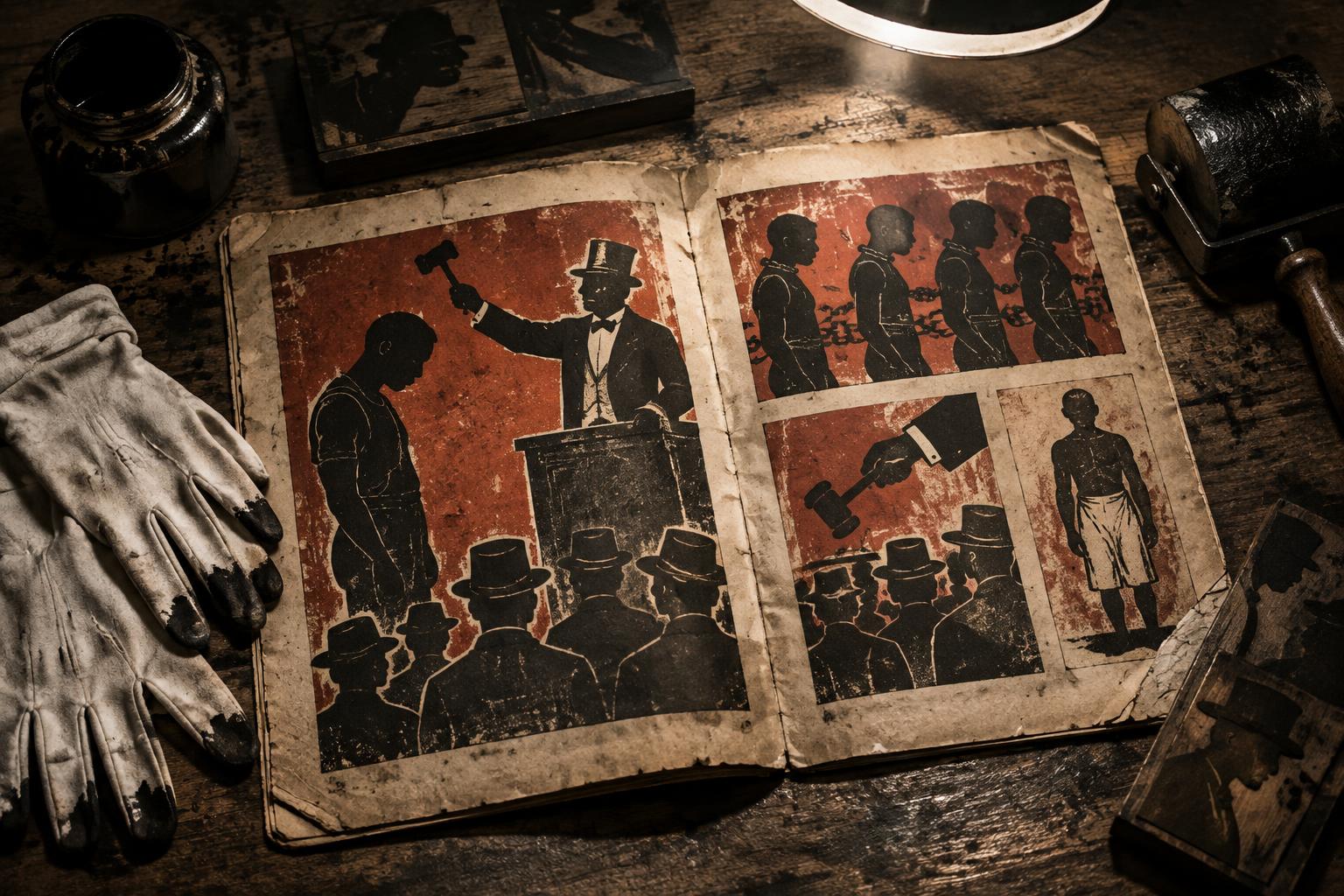
Original museum-style illustration of an aged print archive exposing dehumanizing auction imagery
071929–present

Racist imagery · Childhood · Cultural memory

Racism in the Picture Book

American print and children’s culture

Before Theodor Seuss Geisel became one of America’s most famous children’s authors, he drew Black people as merchandise in a 1929 magazine cartoon. The image belongs to a wider history in which popular entertainment trained children and adults to laugh at Black degradation.

Read the full record
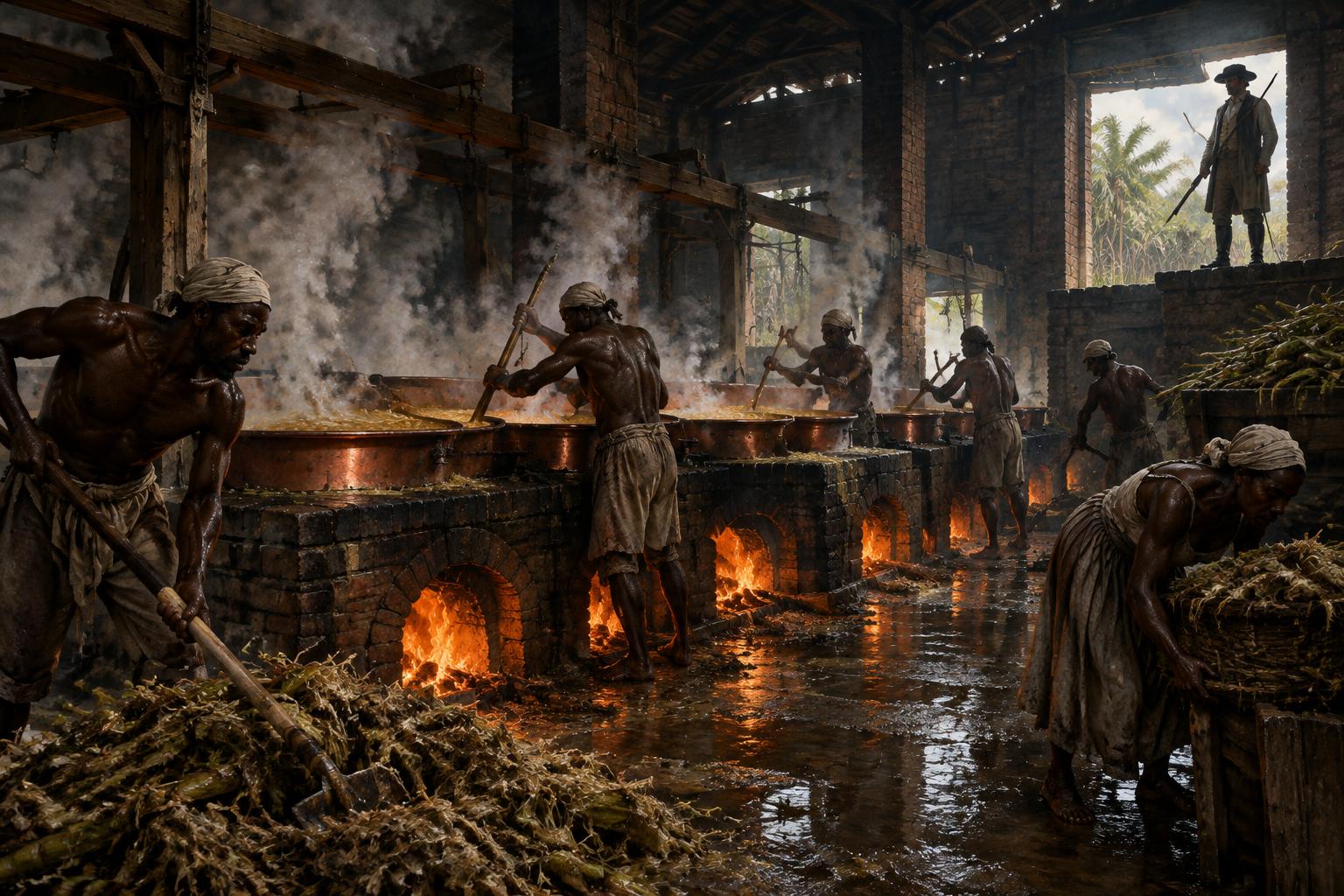
Original documentary illustration of enslaved workers laboring beside open copper kettles in a Caribbean sugar boiling house
0817th–19th centuries

Slavery · Plantation industry · Torture and mortality

Blood in the Sugar

Caribbean sugar colonies

The sweetness consumed in Europe and North America was produced inside a system of forced migration, sleepless labor, burns, mutilation, whipping, disease, and premature death. In the boiling house, enslaved workers stood over open copper kettles while heat and steam turned sugar into wealth for someone else.

Read the full record